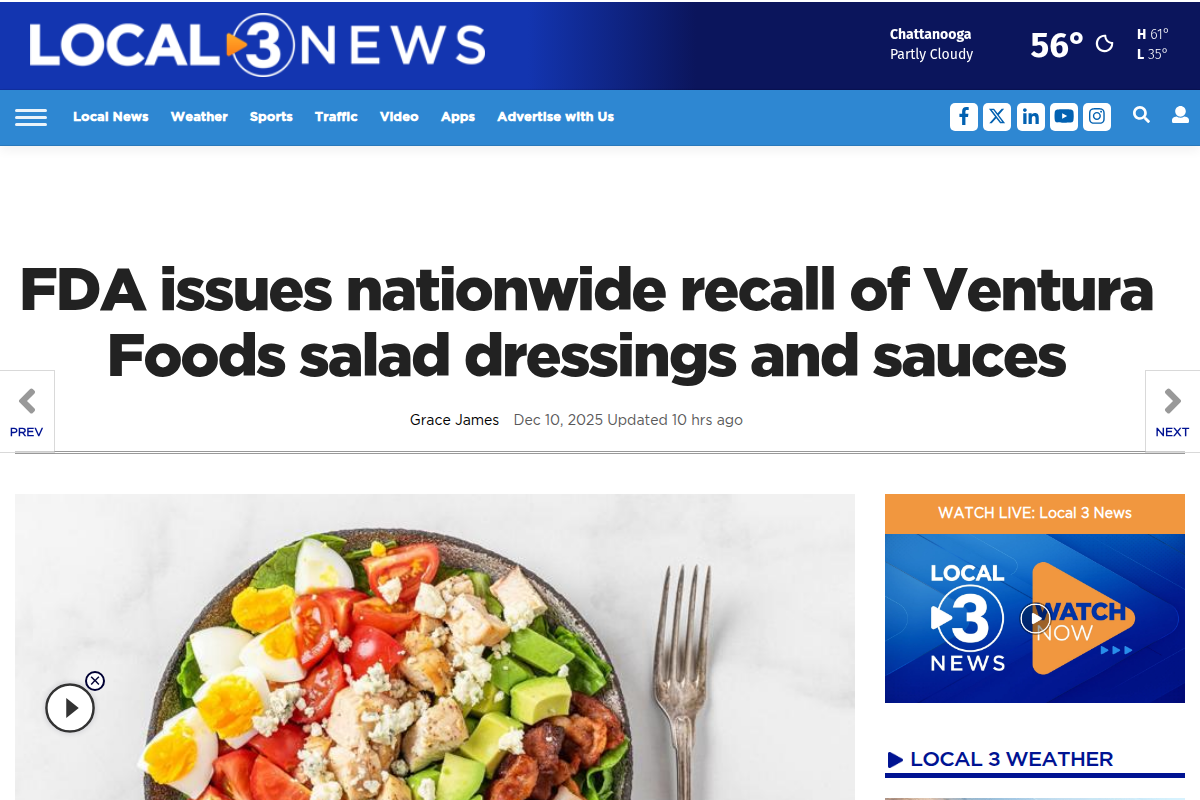
More than 4,000 cases of salad dressings and sauces have been pulled from shelves across the United States after the U.S. Food and Drug Administration (FDA) found black plastic pieces in several Ventura Foods products. The voluntary recall, announced on November 6, affects products sold at major retailers including Costco and Publix, with distribution spanning 27 states.
The contamination was traced to granulated onion used in the dressings. Black plastic fragments were detected, raising choking concerns for consumers. The FDA classified this as a Class II recall, which means the affected products are not likely to cause serious health effects but still should not be consumed.
The products under recall include Monarch Italian Salad Dressing, Sysco Creamy Poblano Avocado Ranch Dressing and Dip, Ventura Caesar Dressing, Pepper Mill Regal Caesar Dressing, Pepper Mill Creamy Caesar Dressing, Publix Deli Carolina-Style Mustard BBQ Sauce, Costco Service Deli Caesar Dressing, Costco Food Court Caesar Dressing, and a foodservice-only Hidden Valley Buttermilk Ranch variety. Packages range in size, but the bulk of the recall involves large containers intended for food service use at delis, food courts, and restaurants.
No Hidden Valley Ranch consumer products sold in stores are part of the recall. A spokesperson for Hidden Valley Ranch clarified that only a one-gallon size of foodservice Hidden Valley Original Buttermilk Ranch Dressing & Dip, which was never distributed, is included. Ventura Foods manufactures this product as a third-party partner.
How The Recall Unfolded And What It Means For Shoppers
The problem surfaced after food safety teams discovered black plastic in the granulated onion ingredient. Ventura Foods responded by pausing shipments and notifying affected retailers. The FDA posted details of the recall on its Enforcement Reports page, urging customers to check their refrigerators, especially if they recently purchased salad dressings or sauces from food courts or deli counters.
The impacted products shipped to food service locations, not only grocery store shelves. This means that families visiting a Costco deli or a Publix prepared foods counter might have purchased or consumed the dressings. The recall affects states throughout the Midwest, South, and parts of the East Coast, including Ohio, Kentucky, and Indiana.
Retailers such as Costco and Publix have posted notices and begun removing affected products. The scope of the recall is large, spanning thousands of gallons of dressing and sauce. Ventura Foods, which supplies dressings to food service outlets under different brand names, worked with the FDA to identify and remove the contaminated shipments.
No illnesses or injuries have been reported. The FDA’s classification as a Class II recall reflects that assessment, but the agency and Ventura Foods both advise consumers not to use or eat any of the recalled products. Instead, the FDA recommends disposing of the dressings or returning them to the place of purchase for a refund.
What Shoppers Should Do And What Comes Next
Most of the products involved do not appear on regular grocery shelves but instead in large containers used by delis, cafeterias, and restaurant kitchens. For consumers, the most likely exposure would be through salad bars, deli-prepared salads, or meals purchased from food courts at stores like Costco and Publix.
The full list of recalled products can be viewed on the FDA’s enforcement report page and at retailer customer service desks. According to a report from WKRC, the recall notice went out quickly once the contamination was confirmed. Both the FDA and Ventura Foods continue to monitor for any reported health effects.
This event has prompted renewed attention to food safety procedures, especially for ingredients sourced in bulk and widely distributed. Salad dressings are a staple for many households and food service operations, so the scale of this recall has attracted public scrutiny.
The FDA and companies involved are working to trace the source of the contamination and prevent future incidents. For now, anyone who recently purchased prepared salads or sauces from affected stores should check for recall notices and follow FDA guidance. The agency continues to investigate and will release more information if the situation changes or expands.
For further details, consumers can refer to the FDA’s Enforcement Reports page or consult their local retailer. The Ventura Foods recall stands as a reminder of how food safety checks and quick response can help protect consumers from unexpected contamination.