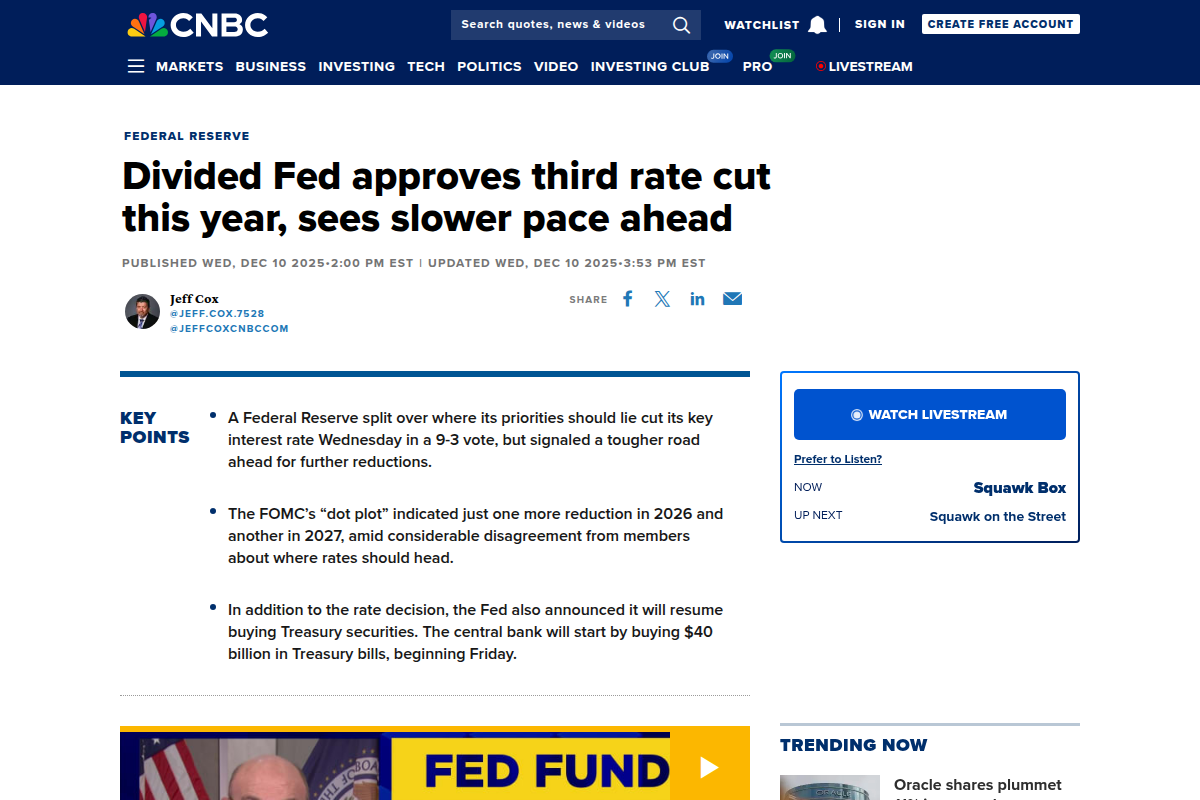
The Federal Reserve cut its benchmark interest rate again this December, marking the third reduction in four months. The current federal funds rate now sits in a range of 3.50% to 3.75%, its lowest level since late 2022. Many Americans are asking how this change will affect mortgage rates, especially as borrowing remains a challenge for homebuyers and those looking to refinance.
The connection between the Fed’s decision and mortgage rates is not straightforward. The Fed controls short-term interest costs, like those on credit cards and personal loans. Mortgage rates, especially for fixed-rate loans, move based on longer-term trends. The 10-year Treasury yield serves as the main benchmark for 30-year fixed mortgage rates. When the Fed cuts rates, it can influence the Treasury yield, but many other factors play a role, including investor expectations and the outlook for inflation.
According to Yahoo Finance, the 10-year Treasury yield and mortgage rates usually move in the same direction as the federal funds rate. Still, experts point out that the movement tends to be gradual. When the market expects a Fed rate cut, lenders often adjust their mortgage rates ahead of the official announcement.
What Borrowers Are Seeing Right Now
Mortgage rates have edged down in recent days, though not by much. On average, the 30-year fixed rate has dropped to 6.19%, according to Freddie Mac. That is down from peaks seen earlier in 2024, when the rate reached 6.73%. The shift has not been dramatic but reflects the gradual trend that follows the Fed’s moves.
Many lenders had already priced in the latest cut, given that rumors of another reduction had circulated for weeks. That means buyers and homeowners did not see a sharp overnight drop after the December announcement. As reported by CBS News, the immediate impact of the Fed’s cut was muted, with most of the change already reflected in current rates.
Some borrowers are still waiting to see if mortgage rates will fall further. Adjustable-rate mortgages, which became less attractive as rates rose, may offer savings if rates continue to drop. Lenders suggest that consumers focus on controlling what they can, like comparing loan offers and choosing between adjustable and fixed-rate products based on personal needs.
Looking to the Months Ahead
The outlook for mortgage rates depends on more than just the Fed’s next meeting. If inflation eases and the bond market responds positively, Treasury yields could fall further, which would likely bring mortgage rates down as well. Small changes can matter: a move from 6.25% to 6.00% can lower monthly payments and help buyers qualify for loans. More homeowners could consider refinancing if rates fall enough to make it worthwhile compared to their original loan terms.
There are still challenges. Inventory remains tight in many housing markets, and economic uncertainty affects investor decisions. The relationship between the White House and the Federal Reserve adds further unpredictability, as policy changes and political events can sway the market.
Lenders and analysts recommend watching bond yields closely in the coming weeks. Any shift in the 10-year Treasury could give an early hint at where mortgage rates are heading next. For now, buyers and homeowners can expect only modest changes. Comparing rates and being ready to act quickly may offer the best advantage if another drop materializes.
Conclusion
The Fed’s recent rate cuts have brought the federal funds rate to its lowest point in three years. While this opens the door for lower borrowing costs across the board, mortgage rates will likely respond slowly and unevenly. The decision’s full impact will unfold over weeks and months, shaped by inflation data, economic growth, and investor confidence. Homebuyers and homeowners will need to stay alert to market shifts, but sudden relief on mortgage rates seems unlikely in the near term. For now, expert advice is simple: pay attention to the numbers that matter, shop around, and be ready to move when the right opportunity appears.